
Beaverton Past Residents by Era
Beaverton house research starts with a time question. Current assessment details can supply a parcel bridge, but older work may move to the Washington County Recording Division, the State Archives inventory, a dated directory, or a newspaper page. The county inventory describes series and past research access, not a promise that every record can be searched on the web today. Record the source, date, page, reel, instrument number, or tax-lot reference each time a name appears. That makes it possible to test a later match instead of treating one screen result as proof.
| Research source | Documented span | Access route | Evidence it can supply |
|---|---|---|---|
| Washington County Public Access | Current public display; no full historic run verified | Guest property and tax search | Property ID, situs address, legal description, map number, and sale-history instrument lead |
| County deed indexes | 1850–1977 in the State Archives inventory | Recording counter or historic-record referral | Direct and indirect index leads, parties, dates, and volume or page references |
| Book of Records | Begins 1964 in the inventory | Washington County public-research route | Modern recorded-document sequence, subject to current availability confirmation |
| Tax Lot Cards / ownership books | 1959–2005 | State Archives inventory and County inquiry | Tax-lot, transfer, owner notation, and year clues |
| County aerial material | 1955–1996 described | State Archives inventory | Dated physical-development context, not title or occupancy proof |
| Beaverton Polk directory | 1959 verified volume | Protected FamilySearch library book | A dated local name or address lead, not a title record |
Use the current property route when the address is known now. For older years, the strongest stable links are the legal description, tax lot, map number, recording date, and instrument number. A person listed in a deed is a party to that document. A name displayed in an assessment record can be an owner or tax-mail contact. Neither label, by itself, proves that the named person lived at the Beaverton address.
Beaverton Past Address Parcel Details
Begin a previous-residents search in Washington County Public Access with the address, tax lot ID, or property identifier. The guest search requires at least three characters for suggestions and labels suggestions as address or property ID. Its default full-results columns are Property ID, SitusAddress, and LegalDescription. On a detail record, preserve the Property ID, situs address, legal description, map number, tax-lot connection, and inspection date before moving to older material.
The sale-history row is the practical handoff. It can display a sale date, seller, buyer, instrument number, sale price, and instrument type. The instrument number is useful because it gives the Recording Division a precise document lead. The row is not the deed image and does not establish a complete chain of title. Check related-property information as well, because a split or merge can make a present parcel a poor stand-in for an earlier one.
Note: Washington County suppresses names and addresses protected under ORS 192.345 and ORS 192.368 from its guest property display.
Washington County Deed Trail
The deed trail for past Beaverton residents begins with land, not a broad name search. The county Recording Division is the custodian for deeds, mortgages, contracts, liens, and copies. Research did not verify a public web grantor-grantee index or an online coverage start year. That means a sale-history instrument, legal description, or tax lot should travel with the request to the county rather than being replaced with a guessed online search.
- Save the current Property ID, situs address, legal description, map number, tax lot, and any sale-history instrument number from the public property display.
- Ask Washington County Recording for the identified document, giving the instrument number when available and the legal-description or tax-lot clue when it is not.
- From the copy, record the grantor, grantee, recording date, document reference, legal description, and any correction or exception reference.
- Use the earlier party and the stable land description to locate the preceding direct or indirect index, deed book, workstation entry, or reel that the county identifies.
- When a parcel split or merged, branch at the recorded legal description and tax-map history instead of forcing the current account through an older layout.
- Grantor / grantee
- The grantor transfers an interest in the document; the grantee receives it. Those roles describe the record, not residence.
- Chain of title
- A documented sequence of land transfers traced through recorded instruments and their land descriptions.
- Legal description
- The recorded land description, usually more durable than a street address when lots change, merge, or split.
Beaverton Recording Counter Records
The Washington County Recording Division offers more than one route when a Beaverton deed is not online. Lobby computers can be used to view documents without charge, and self-prints cost $0.50 a page. Copies can also be requested by phone at 503-846-8752 or by prepaid email at recording@washingtoncountyor.gov. County-made copies cost $4 for the first page and $0.25 for each additional page; certification adds $3.75. Bring or send the parties, approximate date, document type, instrument number, and legal-description or tax-lot clue.
For the earliest work, the State Archives inventory describes Deed Books A–I from 1850 to about 1883, later deed books through 1964, direct and indirect indexes from 1850 to 1977, and a State Archives direct index from 1850 to 1882. It also says the Book of Records begins in 1964 and reported public-research computer access to indexed document images from 1979 forward when surveyed in 2013. Confirm the current counter, workstation, reel, or copy path before traveling or paying. County staff can locate a defined document, but they do not provide legal advice or interpret a title dispute.
Beaverton Past Residents History Sources
The Oregon Historical Society house and building history guide is a useful planning source for a Beaverton address, especially when a current parcel needs to be connected to dated maps, directories, newspapers, and recorded land material. Its Portland directory guidance is mainly for Multnomah County, so use a Portland crosswalk or reverse section only when the address is truly within that source’s geographic reach.
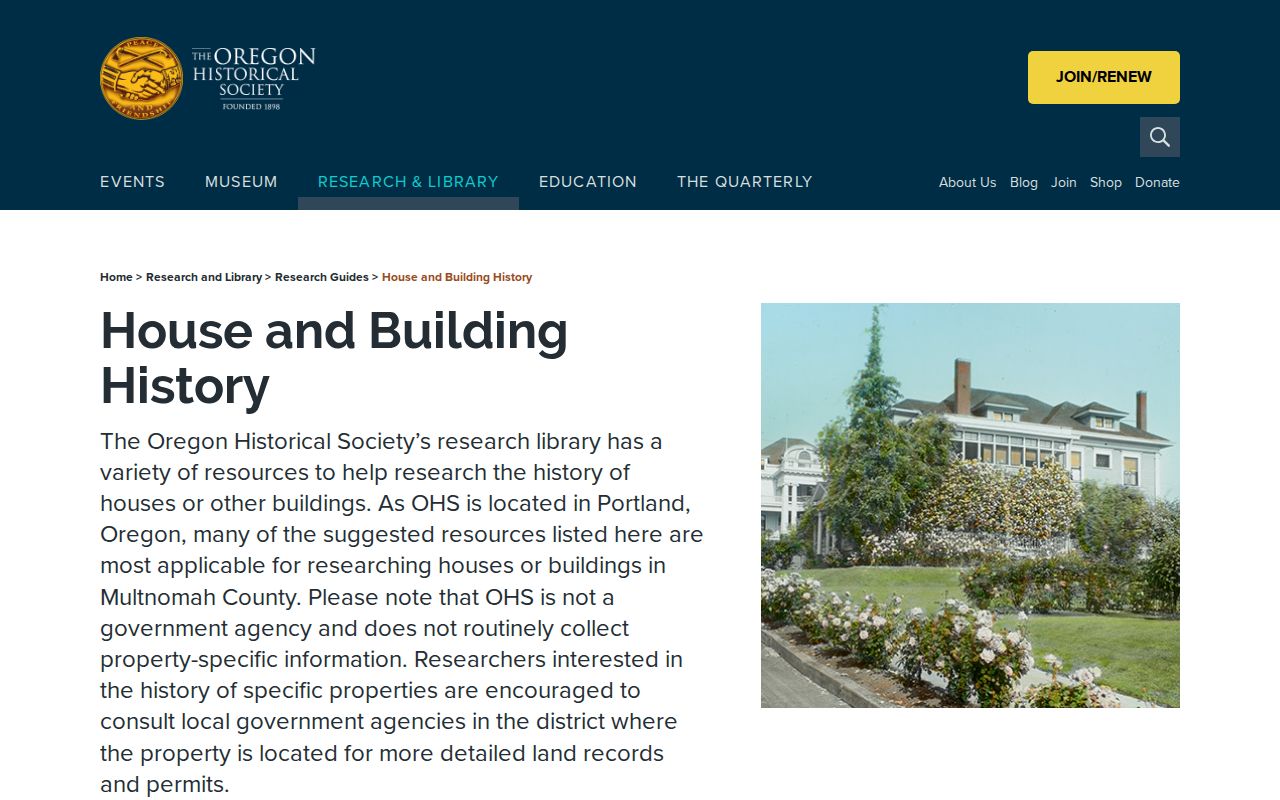
The guide is a research route, not evidence that a particular Beaverton household appears in every collection. Preserve the source-era address rather than silently replacing it with a current postal label. For a claimed old-to-new address match, look for a recorded instrument, plat, survey, official map, or tax-lot-card transition that identifies the connection.
Beaverton’s records have layered custody. The first recorded land claim in the area dates to 1847, the city incorporated in 1893, and county land, tax, probate, and naturalization materials can be more useful than a city source for early years. The current city is an access point for some records, but it did not create every historic document tied to the address.
Beaverton Past Household Dates
For past residents, a deed chain answers only the land-transfer part of the question. The verified local directory anchor is the 1959 R. L. Polk and Company Beaverton city directory, a 526-page FamilySearch Digital Library book with protected, search-only access. It includes nearby communities as well as Beaverton, so a hit needs a careful place check. The catalog does not prove a continuous annual local run, a reverse directory, or a standard entry format. The Beaverton city directory page keeps the collection details separate from this address trail.
A workable household sequence is: dated address and name variants, the 1959 Polk volume or a specifically known directory, a matching census or local archive lead, then a newspaper page. The Beaverton City Library genealogy and microfilm request allows five requests, one book or microfilm item on each form. Its fields ask for a specific title and date or reel, not a general name search. The Main Library is the microfilm route; Murray Scholls is marked no microfilm.
The University of Oregon’s Beaverton Times archive supplies the 1915–1922 run for dated community notices, advertisements, and death notices. Search by the street, spouse, organization, and name variants, then inspect the image and cite the issue date and page.
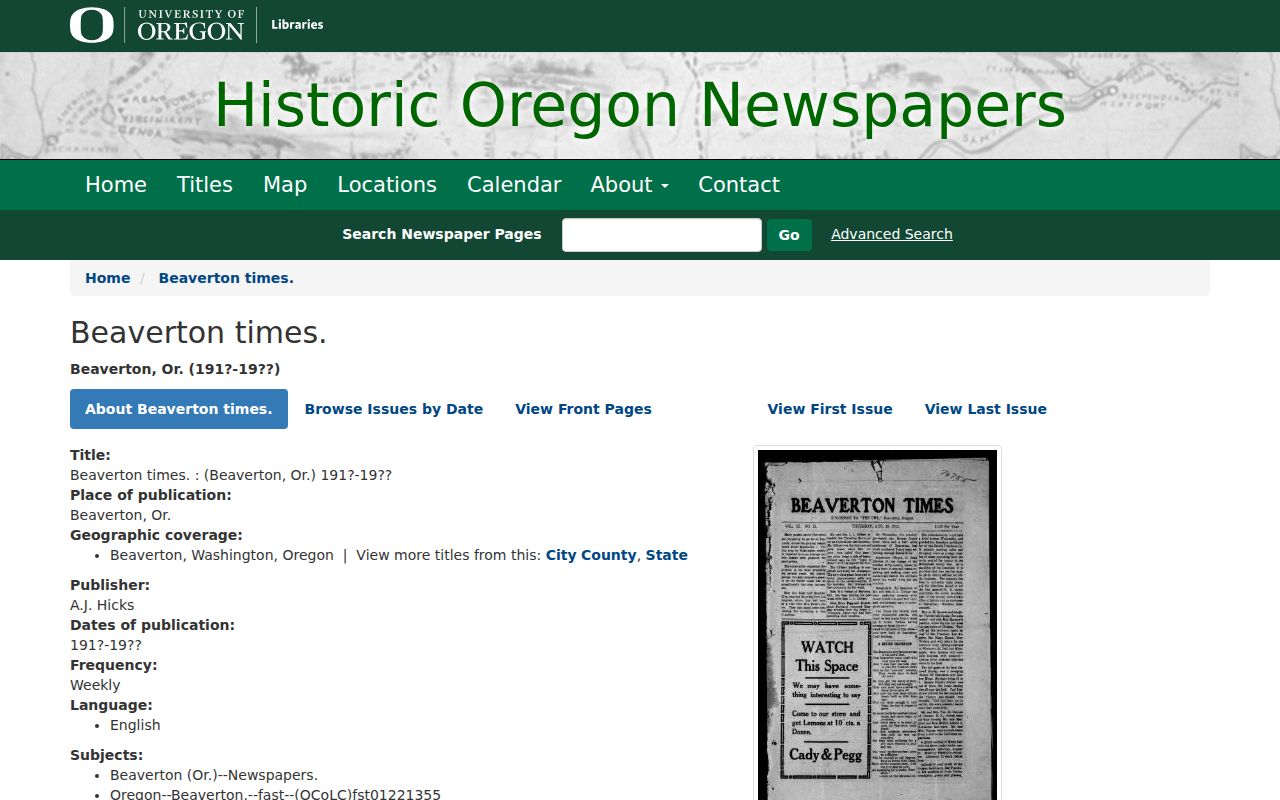
A newspaper item is a lead tied to a date, not a complete roster or a move date. Pair it with a property, directory, census, estate, or other original-record reference before treating it as a household conclusion.
The Beaverton Review archive continues another dated route from late 1923 through April 18, 1941. Its title-specific coverage fills a different time slice, and a query should be checked against the scanned page because optical character recognition can miss names and street forms.
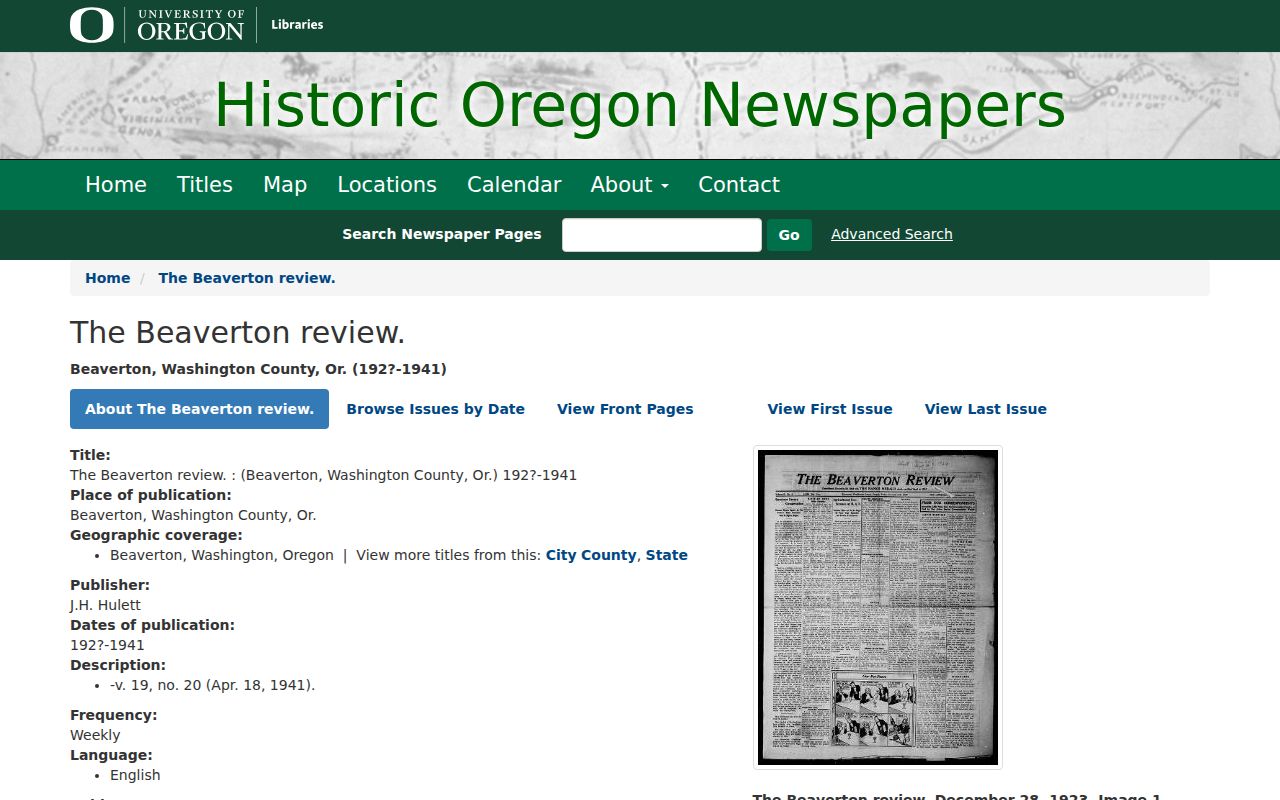
Use the Review alongside the Times and the 1927–1951 Beaverton Enterprise rather than assuming any one newspaper covers a full household timeline. An exact title, date, and page lets another researcher retrace the lead.
Beaverton Past Address Records
Earlier Beaverton trails can move beyond directories. Oregon Historical Society Digital Collections identifies a Washington County census from 1856 and a tax roll from 1852. The State Archives inventory also lists Official Registers of Electors for 1902–1912, a 1912 Beaverton Precinct Register, and a 1905–1966 Washington County School Census at the then-listed Washington County Museum Research Library and Archives. These are separately dated records, not a modern resident list, and their present custody and access should be confirmed before a visit.
The Oregon Historical Society Digital Collections offer a dated search route for maps, photographs, and other historical leads that may help establish the period of a Beaverton address.
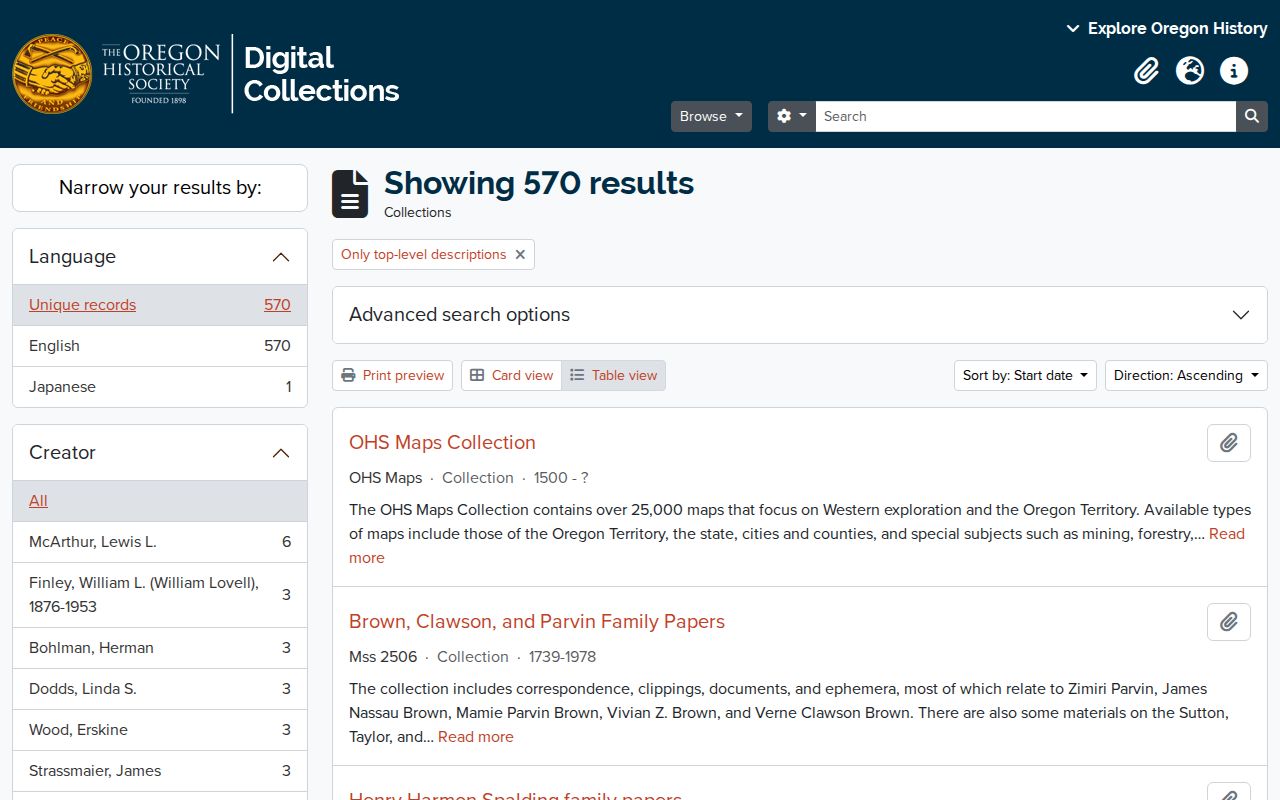
Use a digital-collection result to document the item date, title, repository, and how it relates to the parcel. A current city label, county address point, or ZIP should never be pasted backward onto an old deed, newspaper notice, or directory entry without a source that connects the two forms.
Beaverton House History Limits
Past residents cannot be inferred from a parcel owner, a mailing address, or the absence of a permit hit. The county map and assessment portal are geographic and tax tools. The recorder’s party names establish document roles. A directory, census, newspaper, or archival register may provide a dated household lead, but each has its own scope. Keep gaps visible in the notes: the source searched, spelling used, date span, and whether the search happened on a portal, at a counter, or from microfilm.
Lawful use. Beaverton previous-residents research is appropriate for family history, house history, estate questions, and personal curiosity. Do not use a dated record to track, threaten, harass, or expose any living person, especially where Oregon address protections apply.
Oregon Safe at Home protections and other statutory suppression rules can limit the disclosure of actual addresses. If a record appears protected, stop circulating it and contact the owning agency through its official route. For an incomplete county record, Oregon Public Records Law, ORS 192.311–192.478, provides a request fallback for an existing nonexempt record. It does not require the County to create a new deed index or disclose material that lawfully remains protected.